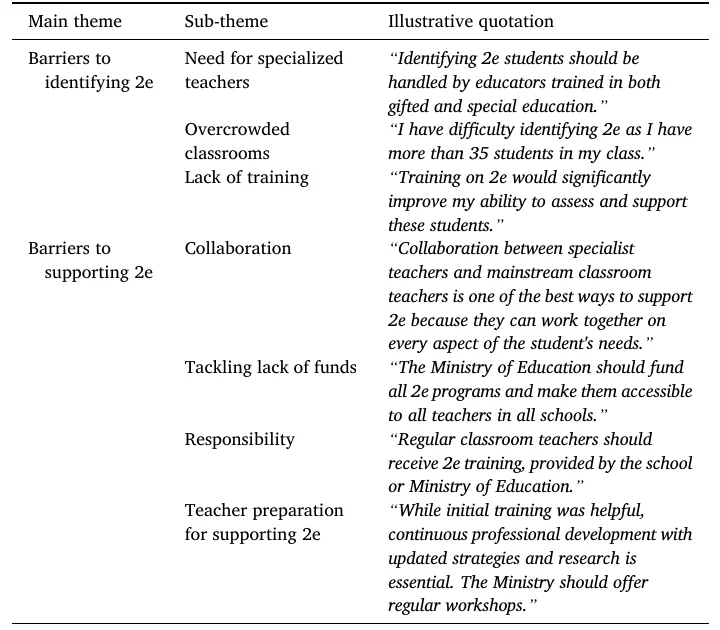
حللت الدراسة إجابات مفتوحة لـ200 معلم ومعلمة في 20 مدرسة ابتدائية حكومية سعودية حول عوائق اكتشاف الطلاب الموهوبين ذوي صعوبات التعلم ودعمهم. وتمثلت عوائق الاكتشاف في نقص المعلمين المؤهلين في المجالين واكتظاظ الفصول وقلة التدريب، وعوائق الدعم في ضيق وقت التعاون وشح التمويل وغموض المسؤولية والحاجة إلى تدريب مستمر.The study analyzed open-ended responses from 200 teachers in 20 Saudi public primary schools on the barriers to identifying and supporting gifted students with learning disabilities. Identification was hindered by a shortage of dual-trained teachers, overcrowded classrooms, and insufficient training; support was hindered by limited collaboration time, scarce funding, unclear responsibility, and the need for ongoing training.
- المستخلصAbstract
- الطلاب مزدوجو الاستثنائية (2e) موهوبون ولديهم صعوبات تعلم في الوقت نفسه، وكثيرًا ما يظلون غير مرئيين في الفصول الدراسية العادية، فتبقى مواهبهم غير مستثمرة وصعوباتهم دون معالجة. بحثت هذه الدراسة تصورات معلمي المرحلة الابتدائية في المملكة العربية السعودية للعوائق التي تحول دون اكتشاف الطلاب مزدوجي الاستثنائية ودعمهم. واتُّبع تصميم نوعي مقطعي، إذ استُخلصت إجابات سردية عبر أسئلة استبانة مفتوحة من 200 معلم (متوسط الخبرة 12 سنة) في 20 مدرسة حكومية. وأجرى مرمّزان مستقلان تحليل محتوى استقرائيًا، وبلغ معامل الاتفاق بينهما (كابا كوهين) 0.83 بعد حسم مواضع الاختلاف، وكانت الأداة قد جُرّبت على ثمانية معلمين لتحسين صياغتها ونطاقها. وتضمنت النتائج محورين رئيسيين: تركزت عوائق الاكتشاف في نقص الكوادر المؤهلة في المجالين، واكتظاظ الفصول، وعدم كفاية التطوير المهني. وتعلقت عوائق الدعم بمحدودية وقت التعاون مع المتخصصين، والقيود المزمنة في الموارد، وغموض المسؤولية على مستوى السياسات، والحاجة إلى تدريب مستمر قائم على الأدلة. وتبرز النتائج حاجة ملحّة إلى أن تقوم الوزارة بما يلي: (أ) تقديم تدريب للمعلمين يشمل مهارات تعليم الموهوبين والتربية الخاصة معًا، و(ب) توفير اعتمادات مالية مخصصة تربط أنشطة الإثراء بالدعم التعليمي الإضافي. ومن شأن تطبيق هذه الإجراءات أن يحوّل اجتهادات المعلمين التخمينية إلى خطوات اكتشاف واضحة وتدريس مخصص للطلاب مزدوجي الاستثنائية. وتدعو الدراسة إلى تدريب تقوده الوزارة يزوّد جميع المعلمين بمهارات تعليم الموهوبين والتربية الخاصة، وإلى فصول أصغر ووقت مجدول للتعاون، وتمويل مضمون للأدوات المساعدة ومواد الإثراء، وإلى بحوث لاحقة تتتبع أثر هذه الخطوات في تقدم الطلاب مزدوجي الاستثنائية.Twice-exceptional (2e) students are both gifted and have learning disabilities, and often remain invisible in mainstream classrooms, leaving their talents untapped and their difficulties unmet. This study investigated Saudi primary-school teachers' perceptions of the barriers to identifying and supporting 2e students. A qualitative, cross-sectional design was employed. Open-ended survey questions elicited narrative responses from 200 teachers (M experience = 12 years) across 20 public schools. Inductive content analysis was conducted by two independent coders who achieved 0.83 Cohen's κ after resolving discrepancies; the instrument had been piloted with eight teachers to refine wording and scope. The findings include two overarching themes. Identification barriers centred on shortages of dual-trained staff, overcrowded classrooms, and insufficient professional development. Support barriers concerned limited collaboration time with specialists, chronic resource constraints, ambiguous policy responsibility, and the need for ongoing, evidence-based training. The findings highlight an urgent need for the ministry to (a) give teachers training that covers both gifted and special-education skills and (b) provide dedicated funds that connect enrichment activities with extra learning support. Putting these measures in place would turn teachers' guesswork into clear identification steps and personalised teaching for twice-exceptional students. The study calls for ministry-led training that equips all teachers with both gifted- and special-education skills, smaller classes and scheduled collaboration time, guaranteed funds for assistive tools and enrichment materials, and follow-up research that tracks how these steps improve twice-exceptional students' progress.
الكلمات المفتاحية:Keywords: ازدواجية الاستثنائية؛ الطلاب مزدوجو الاستثنائية؛ تعليم الموهوبين؛ تنمية الموهبة؛ التربية الخاصة؛ صعوبات التعلم؛ المملكة العربية السعودية؛ التعليم الابتدائيTwice-exceptionality; Twice-exceptional students; Gifted education; Talent development; Special education; Learning disabilities; Saudi Arabia; Primary education
الترجمة العربية للمستخلص غير رسمية، والنص المعتمد هو نسخة المجلة.
Alsamani, O. A., Alsamiri, Y. A., & Alabdulwahab, R. A. (2026). Twice-exceptionality in primary schools: Teachers’ perceived barriers to identifying and supporting 2e students. Acta Psychologica, 262, 106031. https://doi.org/10.1016/j.actpsy.2025.106031
- 3عوائق للاكتشاف: نقص المعلمين المؤهلين في المجالين، واكتظاظ الفصول، وقلة التدريبIdentification barriers: too few dual-trained teachers, overcrowded classrooms, insufficient training
- 4عوائق للدعم: ضيق وقت التعاون، وشح التمويل، وغموض المسؤولية، والحاجة إلى تدريب مستمرSupport barriers: limited collaboration time, scarce funding, unclear responsibility, need for ongoing training
- 35+طالبًا في الفصل، كما وصف أحد المعلمين عائق الاكتظاظstudents in one class, as a teacher described the crowding barrier
- 0.83معامل كابا كوهين للاتفاق بين المرمّزينCohen's κ for inter-coder agreement
النقاشDiscussion
تعليق أو سؤال عن هذا البحثA comment or question about this study
هل طبّقت شيئًا من نتائجه في عملك، أو لديك سؤال أو ملاحظة؟ أقرأ التعليقات كلها، وأنشر المفيد منها مع الرد.Have you applied any of its findings in your work, or do you have a question or an observation? I read every comment and publish the useful ones with a reply.