راجعت الدراسة 26 دراسة عن توظيف الذكاء الاصطناعي في تعليم الموهوبين، وصنّفتها في مسارين: مسار يستخدم الذكاء الاصطناعي في التدريس والتطوير، ومسار يستخدمه في التعرف على الموهوبين ودعم القرار. وتخلص إلى أن قيمة هذه الأدوات مرهونة بتصميم المهمة وحكم المعلم والإشراف البشري، وأن الأدلة ما تزال في مرحلة مبكرة.The review examined 26 studies on AI in gifted education and grouped them into two trajectories: AI for instruction and development, and AI for identification and decision support. It concludes that the value of these tools depends on task design, teacher judgment and human oversight, and that the evidence remains at an early stage.
المقدمةIntroduction
يتزايد تبنّي الذكاء الاصطناعي في تعليم الموهوبين والمتفوقين، غير أن الأدبيات الناشئة ما تزال متفرقة بين المجالات التعليمية والتطويرية والتقويمية والأخلاقية.Artificial intelligence (AI) is being increasingly adopted across gifted and talented education. However, the emerging literature remains dispersed across instructional, developmental, assessment, and ethical domains.
المنهجيةMethods
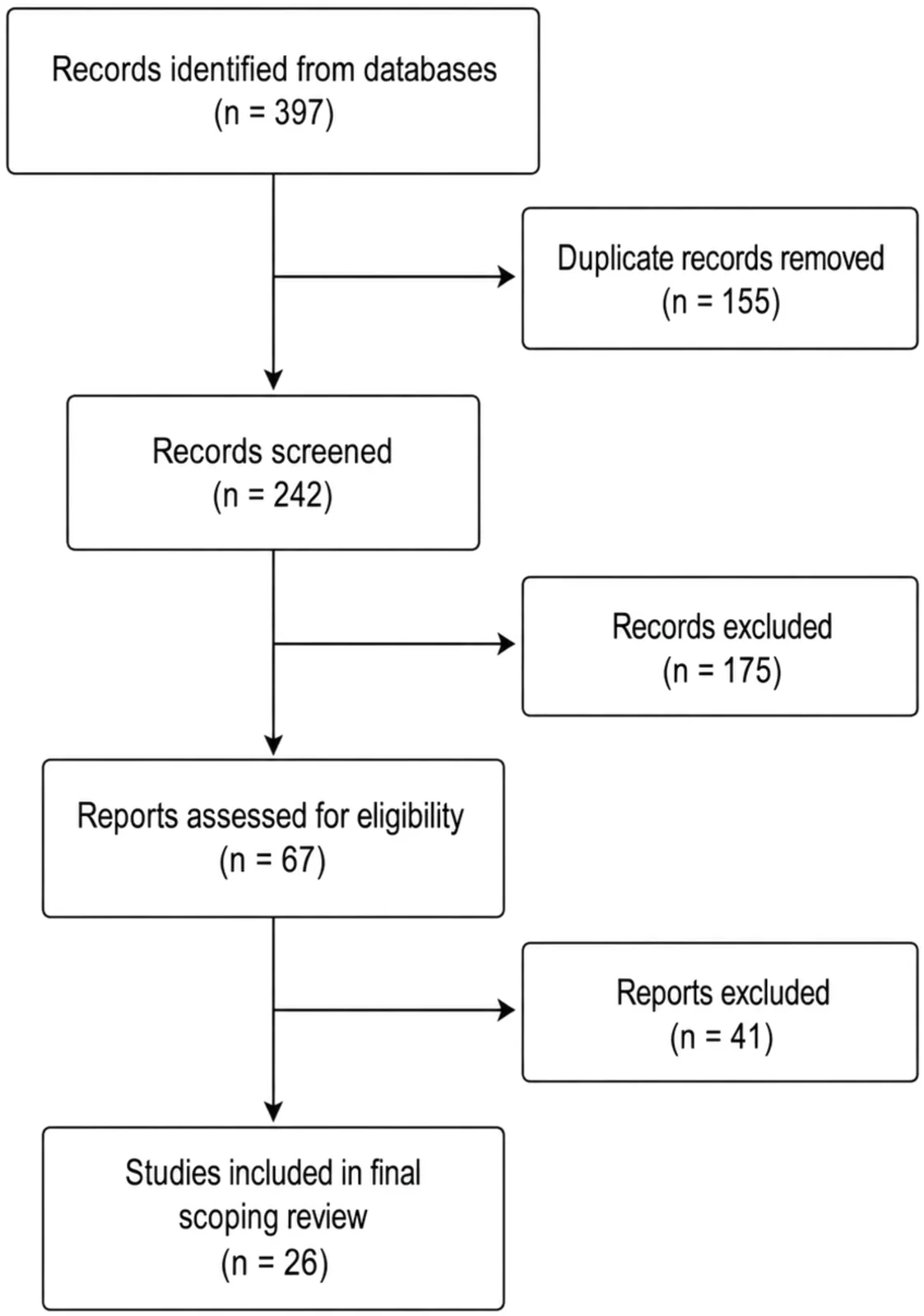
ترسم هذه المراجعة النطاقية خريطة لكيفية دراسة الذكاء الاصطناعي في تعليم الموهوبين والمتفوقين، بما في ذلك أشكال الذكاء الاصطناعي المدروسة، والفئات والسياقات الممثَّلة، والأغراض التعليمية المستهدفة، والفرص والمخاطر والفجوات الواردة في الأدبيات. واتباعًا لمنهج المراجعة النطاقية المسترشد بـ PRISMA-ScR وإطار السكان–المفهوم–السياق، أسفرت عمليات البحث في قواعد البيانات والفرز عن 26 دراسة مستوفية للمعايير.This scoping review maps how AI has been studied in gifted and talented education, including the forms of AI examined, the populations and contexts represented, the educational purposes addressed, and the opportunities, risks, and gaps reported across the literature. Following a scoping review approach informed by PRISMA-ScR and the Population–Concept–Context framework, database searches and screening procedures identified 26 eligible studies.
النتائجResults
حددت المراجعة مسارين عامين. الأول تعليمي وتطويري، يُستخدم فيه الذكاء الاصطناعي التوليدي والتعليم الخصوصي الذكي والمواد المولَّدة آليًا، أو يُقترح استخدامها، لدعم التمايز والكتابة والتساؤل والإبداع والإرشاد والتعلم المُفرَّد. والثاني تقويمي، تُطبَّق فيه نماذج تعلم الآلة وما يتصل بها في التعرف على الموهوبين والمتفوقين، والتعرف على مزدوجي الاستثنائية، ودعم القرار. وفي المسارين كليهما، تقدّم الأدبيات الذكاء الاصطناعي أداةً تتوقف قيمتها على تصميم المهمة وحكم المعلم والإشراف البشري، أكثر من كونه بديلًا عن المعلمين. ومن الفرص المذكورة دعم الإعداد المتمايز، والتعلم المتقدم، والإنتاج الإبداعي، والتعرف على الملامح المركبة للمتعلمين. ومن المخاطر المذكورة التحيز في بيانات التعرف، والاعتماد المفرط، وتهديد الأصالة، ومخاوف الخصوصية، ومحدودية الشفافية، وضعف إعداد المعلمين والمؤسسات.The review identified two broad trajectories. The first is instructional and developmental, where generative AI, AI tutoring, and AI-generated materials are used or proposed to support differentiation, writing, questioning, creativity, mentoring, and personalized learning. The second is assessment-oriented, where machine learning and related models are applied to gifted and talented identification, twice-exceptional identification, and decision support. Across both trajectories, the literature positions AI less as a replacement for educators than as a tool whose value depends on task design, teacher judgment, and human oversight. Reported opportunities include support for differentiated preparation, advanced learning, creative production, and the recognition of complex learner profiles. The reported risks include bias in identification data, overreliance, threats to originality, privacy concerns, limited transparency, and insufficient preparation among educators and institutions.
المناقشةDiscussion
إجمالًا، ما تزال قاعدة الأدلة حول الذكاء الاصطناعي في تعليم الموهوبين والمتفوقين في مرحلة مبكرة. وتشير المراجعة إلى أن للذكاء الاصطناعي إمكانات للنهوض بتعليم الموهوبين والمتفوقين. وينبغي أن تتجه البحوث المستقبلية نحو دراسات طولية ومقارنة ومتمركزة حول العدالة، ولا سيما في التعرف المدعوم بالذكاء الاصطناعي وتعليم مزدوجي الاستثنائية.Overall, the evidence base on AI in gifted and talented education remains at an early stage. The review suggests that AI holds potential to advance gifted and talented education. Future research should move toward longitudinal, comparative, and equity-centered studies, particularly in AI-supported identification and twice-exceptional education.
الكلمات المفتاحية:Keywords:الذكاء الاصطناعي؛ ChatGPT؛ الذكاء الاصطناعي التوليدي؛ تعليم الموهوبين والمتفوقين؛ تعلم الآلة؛ مراجعة نطاقية؛ تنمية الموهبة؛ مزدوجو الاستثنائيةartificial intelligence; ChatGPT; generative AI; gifted and talented education; machine learning; scoping review; talent development; twice-exceptional
الترجمة العربية للمستخلص غير رسمية، والنص المعتمد هو نسخة المجلة.
التوثيق (APA)Cite (APA)
Alsamani, O. A., & Alsamiri, Y. A. (2026). Artificial intelligence in gifted and talented education: A scoping review. Frontiers in Psychology, 17, 1898467. https://doi.org/10.3389/fpsyg.2026.1898467
26دراسة مستوفية للمعايير شملتها المراجعة.eligible studies included in the review.
2مساران: تعليمي تطويري، وتقويمي للتعرف ودعم القرار.trajectories: instructional/developmental and assessment-oriented.
2eالتعرف على مزدوجي الاستثنائية ضمن تطبيقات تعلم الآلة.twice-exceptional identification appears among machine-learning applications.
توظيف الذكاء الاصطناعي في برامج الموهوبين أداةً مساندة للمعلم، مع إبقاء القرار التربوي بيد الإنسان.Use AI in gifted programs as a support for teachers, keeping educational decisions with people.
مراجعة بيانات التعرف والنماذج الآلية للكشف عن التحيز قبل اعتمادها في الترشيح.Audit identification data and models for bias before using them in nomination.
إعداد المعلمين والمؤسسات لاستخدام هذه الأدوات، وتوجيه البحوث نحو دراسات طولية ومقارنة.Prepare educators and institutions to use these tools, and direct research toward longitudinal and comparative studies.
كيف يُدرَس الذكاء الاصطناعي في تعليم الموهوبين، وما الذي يعد به وما الذي يُخشى منه؟How is AI being studied in gifted education, and what does it promise and risk?
دخل الذكاء الاصطناعي ميدان تعليم الموهوبين بسرعة، لكن الأبحاث حوله ظلت متفرقة بين التدريس والتقييم والأخلاقيات. ترسم هذه المراجعة الاستكشافية خريطة لهذا الأدب: أنواع الذكاء الاصطناعي التي دُرست، والفئات والسياقات الممثَّلة، والأغراض التي وُظِّف لها، والفرص والمخاطر والفجوات التي أبلغت عنها الدراسات.Artificial intelligence has entered gifted and talented education quickly, but research on it has remained scattered across instruction, assessment, and ethics. This scoping review maps that literature: the types of AI studied, the populations and contexts represented, the purposes AI was put to, and the opportunities, risks, and gaps the studies report.
26دراسة استوفت معايير الإدراجstudies met the inclusion criteria
397سجلًا من أربع قواعد بيانات قبل الفرزdatabase records before screening
19من الدراسات نُشرت في عام 2025 وحدهof the studies were published in 2025 alone
13دراسة تناولت الذكاء الاصطناعي التوليدي والنماذج اللغوية الكبيرةstudies examined generative AI and large language models
لماذا يهم هذا الموضوع؟Why this matters
يحتاج الطلبة الموهوبون إلى عمق وتعقيد يتجاوزان توقعات الصف الدراسي، ويشكو معلموهم من ضيق الوقت والدعم اللازمين للتخطيط الفردي. ويُنظر إلى الذكاء الاصطناعي التوليدي بوصفه وسيلة لإعداد مهام متمايزة ومواد قائمة على الاهتمامات كانت تستغرق ساعات. غير أن للذكاء الاصطناعي وظيفة ثانية أبعد أثرًا: المساعدة في تحديد من يُعترف به موهوبًا أصلًا. وهنا تتجاور الوعود والمخاطر؛ فالنماذج تتعلم من السجلات القائمة، وقد تعيد إنتاج التحيزات التي يُفترض أن تحدّ منها. والمهمة الضعيفة التي يولّدها الذكاء الاصطناعي يمكن للمعلم تعديلها، أما قرار التعرف الخاطئ فقد يحدد حصول الطالب على الخدمات من عدمه.Gifted learners need depth and complexity beyond grade-level expectations, and their teachers report limited time and support for the individualized planning this requires. Generative AI is increasingly seen as a way to draft differentiated tasks and interest-based materials that would otherwise take hours. AI also serves a second, more consequential function: helping decide who is identified as gifted in the first place. Here promise and hazard run side by side, since models learn from existing records and can reproduce the disparities they are meant to reduce. A weak AI-generated task can be revised by a teacher; a flawed identification decision can determine access to services.
كيف أُجريت المراجعة؟How the review worked
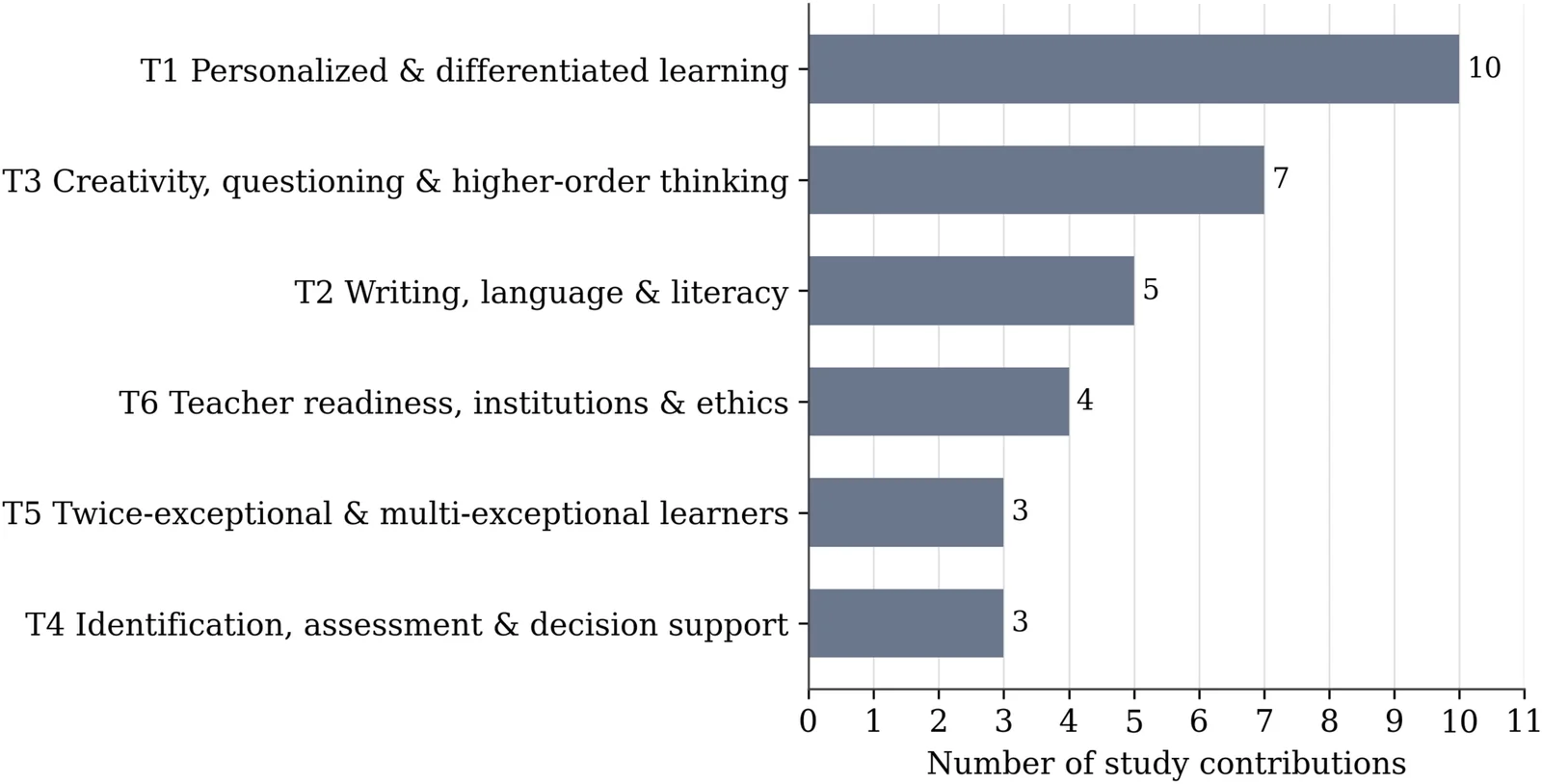
اتبعت الدراسة منهج المراجعة الاستكشافية وفق إرشادات PRISMA-ScR وإطار «الفئة–المفهوم–السياق». وبُحث في أربع قواعد بيانات (Web of Science وScopus وEBSCOhost وProQuest) عن منشورات بين يناير 2010 ومايو 2026، فنتج 397 سجلًا، بقي منها 242 بعد حذف المكرر. فحص باحثان مستقلان العناوين والملخصات ثم النصوص الكاملة، وبلغ معامل الاتفاق (كوهين κ) 0.84 في مرحلة الأهلية، وانتهيا إلى 26 دراسة. ثم استُخلصت البيانات من كل دراسة، وصُنّفت الدراسات استقرائيًا في ستة محاور.The study followed a scoping review design reported in line with PRISMA-ScR and guided by the Population–Concept–Context framework. Four databases (Web of Science, Scopus, EBSCOhost, and ProQuest) were searched for publications from January 2010 through May 2026, yielding 397 records, or 242 after duplicates were removed. Two reviewers independently screened titles, abstracts, and full texts, reaching Cohen's κ = 0.84 at the eligibility stage, and agreed on a final set of 26 studies. Data were then charted for each study, and the studies were grouped inductively into six themes.
صورة الأدب: حديث ومتركزA recent and concentrated literature
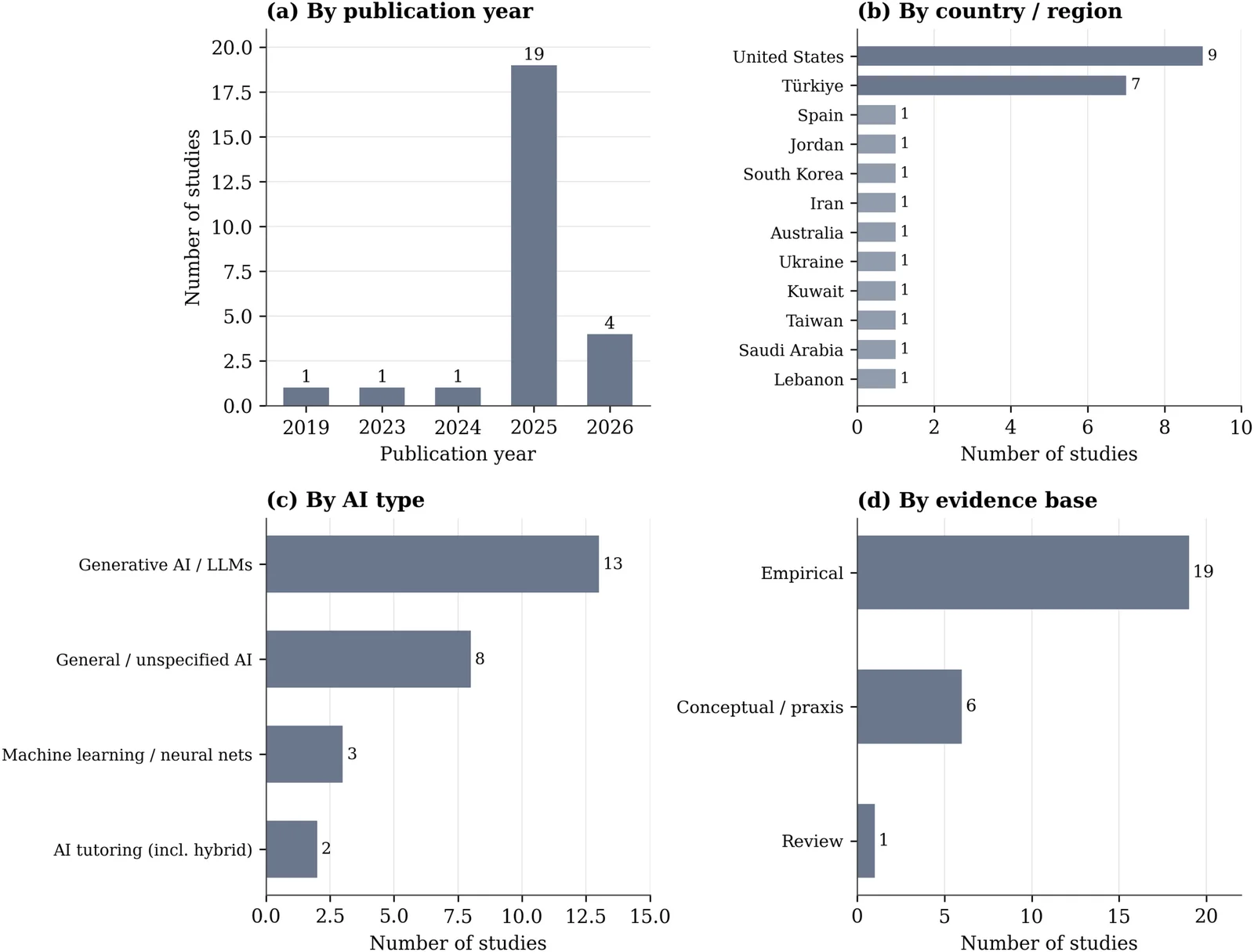
الأدب حديث جدًا: معظم الدراسات نُشرت بعد عام 2023، و19 منها في عام 2025 وحده. ويغلب عليه الذكاء الاصطناعي التوليدي، بينما ظهر تعلم الآلة والشبكات العصبية أساسًا في دراسات التعرف والتصنيف. وهو متركز جغرافيًا؛ إذ جاءت 9 دراسات من الولايات المتحدة و7 من تركيا، ولم تأتِ أي دراسة من أفريقيا جنوب الصحراء أو أمريكا اللاتينية أو جنوب آسيا.The literature is very recent: most studies appeared after 2023, and 19 were published in 2025 alone. Generative AI dominates, while machine learning and neural networks appear mainly in identification and classification studies. It is also geographically concentrated, with 9 studies from the United States and 7 from Türkiye, and none from Sub-Saharan Africa, Latin America, or South Asia.
مخطط PRISMA لمسار اختيار الدراسات: من 397 سجلًا في قواعد البيانات إلى 26 دراسة مُدرجة في المراجعة.PRISMA flow diagram of study selection: from 397 database records to the 26 studies included in the review.خصائص الدراسات المُدرجة بحسب (أ) سنة النشر، (ب) الدولة، (ج) نوع الذكاء الاصطناعي، (د) طبيعة الأدلة.Characteristics of the included studies by (a) publication year, (b) country or region, (c) AI type, and (d) evidence base.توزيع إسهامات الدراسات على المحاور الستة؛ يمكن أن تُسهم الدراسة الواحدة في أكثر من محور.Distribution of study contributions across the six themes; a single study could contribute to more than one theme.
ماذا وجدت الدراسة؟What the study found
1
التعلم المخصص والمتمايزPersonalized and differentiated learning
كان هذا أوضح مجالات الأدب حضورًا. قُدِّم الذكاء الاصطناعي بوصفه أداة توسّع قدرة المعلم على تقديم فرص تعلم متقدمة وقائمة على الاهتمامات، لا بديلًا عن حكمه المهني. لكن أغلب هذا العمل مفاهيمي أو تطبيقي، وقد وجدت دراسة شبه تجريبية لمساعد تعليمي قائم على نموذج لغوي في فصل علوم افتراضي متقدم أنه لا فروق دالة في نواتج التعلم، مع حاجة تفاعل الطلبة مع الأداة إلى بنية وتوجيه أوضح.This was the most visible domain in the literature. AI was framed as a tool that may extend teachers' capacity to offer advanced and interest-based learning, not as a substitute for professional judgment. Much of this work, however, is conceptual or practice-oriented, and a quasi-experimental study of an LLM co-tutor in an advanced virtual science class found no significant differences in learning outcomes, while showing that students' interactions with AI required clearer structure and guidance.
2
الكتابة واللغة والقراءةWriting, language, and literacy
دُرس ChatGPT أداةً للعصف الذهني وداعمًا للكتابة ومصدرًا للتغذية الراجعة، ومولِّدًا لمواد قرائية يعدّها المعلم وفق اهتمامات الطلبة ومستوياتهم. أفاد طلبة جامعيون موهوبون بكسب في الكفاءة والمرونة، لكن الدراسات نبهت أيضًا إلى قضايا النزاهة والأصالة والاعتماد على الأداة.ChatGPT was examined as a brainstorming tool, a writing support, a source of feedback, and a teacher-facing generator of literacy materials matched to students' interests and reading levels. Gifted college students reported gains in efficiency and adaptability, but the studies also flagged concerns about integrity, originality, and dependence on AI.
في إحدى الدراسات استخدم المعلمون ChatGPT لكتابة نصوص مسرحية مخصصة من عوالم تخيلها الطلبة أنفسهم، فتحوّل الذكاء الاصطناعي من مساعد للطالب إلى أداة لتصميم المنهج.In one study, teachers used ChatGPT to write personalized playscripts from worlds the students had imagined, shifting AI from a student writing assistant to a curriculum-design tool.
3
الإبداع والتساؤل والتفكير العاليCreativity, questioning, and higher-order thinking
تشير الدراسات إلى فائدة مشروطة: يدعم الذكاء الاصطناعي التفكير العالي حين يُدمج في مهام تطلب من الطلبة مساءلة الأفكار وتطويرها، وتضعف قيمته حين تُعامل مخرجاته بوصفها نقطة النهاية. فالقيمة تتوقف على تصميم المهمة أكثر من الأداة نفسها.The studies point to a conditional benefit: AI may support higher-order thinking when it is embedded in tasks that require students to question and extend ideas, and its value is weaker when students treat AI output as an endpoint. The value seems to depend on how the task is built rather than on the tool.
كانت الأسئلة التي ولّدها الذكاء الاصطناعي أقوى في المستويات الدنيا من تصنيف بلوم، بينما تفوقت الأسئلة التي كتبها البشر في المستويات العليا.AI-generated questions were stronger at the lower levels of Bloom's Taxonomy, whereas human-written questions were stronger at the higher levels.
حسّنت أنشطة STEM المولَّدة بالذكاء الاصطناعي الإبداع العلمي لدى طلبة موهوبين في الصف الرابع.AI-generated STEM activities improved scientific creativity among gifted fourth graders.
4
التعرف والتقييم ودعم القرارIdentification, assessment, and decision support
تعاملت دراسات تعلم الآلة مع التعرف على الموهوبين بوصفه مشكلة تصنيف، ووجدت أن النماذج قد تكشف أنماطًا يصعب رصدها بالإجراءات التقليدية. لكن تطبيقها كشف تحديات تتعلق بالطلبة الأقل تمثيلًا وتحيز تقديرات المعلمين عبر الفئات الاجتماعية والاقتصادية والعرقية. ولذلك تخلص المراجعة إلى أن الذكاء الاصطناعي في التقييم ينبغي أن يُفهم دعمًا للقرار لا بديلًا عنه.Machine learning studies treated gifted identification as a classification problem and found that models could detect patterns that traditional procedures may miss. Applying them, however, revealed challenges related to underrepresented students and teacher rating bias across socioeconomic and ethnic groups. The review therefore concludes that AI in assessment should be understood as decision support, not decision replacement.
5
مزدوجو الاستثنائيةTwice-exceptional learners
كان هذا مجالًا صغيرًا لكنه بالغ الأهمية، لأن هؤلاء الطلبة يجمعون بين قدرات متقدمة وصعوبات قد يحجب أحدها الآخر. أظهر التدريس الهجين بين الإنسان والذكاء الاصطناعي تحسنًا في مهارات الكتابة لدى طلبة ثنائيي اللغة مزدوجي الاستثنائية، واستُخدمت ملفات متعلمين افتراضية لمساعدة المعلمين على التخطيط. لكن التعقيد نفسه يجعلهم عرضة لسوء التصنيف إذا اعتمدت النماذج على بيانات ناقصة أو فئات جامدة.This was a smaller but particularly important area, since these learners combine advanced strengths with difficulties that can mask one another. Human–AI hybrid tutoring improved writing-related outcomes for twice-exceptional bilingual students, and synthetic learner profiles helped teachers think through support before classroom use. The same complexity, though, makes these learners vulnerable to misclassification when AI systems rely on incomplete data or rigid categories.
6
جاهزية المعلم والممارسة المؤسسية والأخلاقياتTeacher readiness, institutions, and ethics
ظهر التطبيق المسؤول شرطًا لجميع الاستخدامات الأخرى. أبدى معلمو الموهوبين نظرة إيجابية وكفاءة ذاتية مرتفعة نسبيًا في استخدام الذكاء الاصطناعي، مع حذر من القضايا الأخلاقية وحاجة إلى تطوير مهني موجّه. فدمج الذكاء الاصطناعي في تعليم الموهوبين ليس مسألة تقنية في المقام الأول، بل مسألة مهنية وتربوية تشكّلها خبرة المعلم وسياسات المؤسسة والإشراف البشري.Responsible implementation emerged as a condition for every other use. Gifted educators held generally positive views and relatively high AI self-efficacy, alongside caution about ethical issues and a need for targeted professional development. AI integration in gifted education is therefore not mainly a technical issue but a professional and pedagogical one, shaped by teacher expertise, institutional policy, and human oversight.
الفرص والمخاطر كما رصدتها المراجعةOpportunities and risks reported in the literature
الفرصOpportunities
إعداد تعليمي متمايزDifferentiated preparation
تعلم متقدمAdvanced learning
إنتاج إبداعيCreative production
التعرف على الملفات المعقدة للمتعلمينRecognizing complex learner profiles
المخاطرRisks
تحيّز في بيانات التعرفBias in identification data
الاعتماد المفرطOverreliance
تهديد الأصالةThreats to originality
الخصوصيةPrivacy
محدودية الشفافيةLimited transparency
ضعف إعداد المعلمين والمؤسساتInsufficient preparation of educators and institutions
ما الذي يعنيه ذلك عمليًا؟What it means in practice
في التدريس اليومي، يفيد الذكاء الاصطناعي أكثر في الإعداد السريع لا في تقديم تعليم جاهز؛ والمكسب الأبقى يأتي من مهام تطلب من الطلبة نقد مخرجاته ومراجعتها وتطويرها.In everyday instruction, AI is most useful for rapid preparation rather than finished teaching; the more durable gain comes from tasks that ask students to critique, revise, or extend what AI produces.
حين يُستخدم في التعرف، يكون مصدرًا واحدًا للأدلة بين مصادر عدة لا القرار نفسه: مع الإفصاح عن البيانات التي يعتمد عليها، ومراقبة أدائه عبر الفئات السكانية، وإبقاء المراجعة البشرية على كل قرار مؤثر.Where AI informs identification, it belongs in the process as one source of evidence among several, not as the decision itself: be explicit about the data the model uses, monitor its performance across demographic groups, and keep human review over every consequential decision.
مزدوجو الاستثنائية يستدعون أكبر قدر من الحذر؛ فالقرارات بشأنهم أسلم حين يقف الذكاء الاصطناعي إلى جانب معرفة المختصين والأسر والطلبة أنفسهم.Twice-exceptional learners call for the most caution; decisions about them are sounder when AI sits alongside the knowledge of specialists, families, and the students themselves.
على مستوى المؤسسات، تبقى السياسات المبنية على مبادئ (الإفصاح، والاستخدام المقبول، وخصوصية البيانات، ومراجعة المعلم للمواد المولَّدة) صالحة مع تغيّر الأدوات، بخلاف القواعد الخاصة بمنصات بعينها.At the institutional level, principle-based policies covering disclosure, acceptable use, data privacy, and teacher review of AI-generated materials remain useful as tools change, whereas platform-specific rules date quickly.
يحتاج البحث إلى الانتقال من إثبات الإمكان إلى دراسات طولية ومقارنة ومتمحورة حول العدالة، ولا سيما في التعرف المدعوم بالذكاء الاصطناعي وتعليم مزدوجي الاستثنائية.Research needs to move from demonstrating feasibility toward longitudinal, comparative, and equity-centered studies, particularly in AI-supported identification and twice-exceptional education.
تتوقف فائدة الذكاء الاصطناعي في تعليم الموهوبين على الحكم البشري أكثر من الأدوات نفسها: قد يخفف عبء الإعداد ويكشف أنماطًا في الملفات المعقدة، لكن قرارات التحدي والعدالة وما يُعدّ عملًا أصيلًا للطالب تبقى بيد المعلمين والمقيّمين.AI's usefulness in gifted education depends on human judgment more than on the tools themselves: it may ease preparation and surface patterns in complex profiles, but decisions about challenge, equity, and what counts as a student's own work remain with teachers and evaluators.
مبني على البحث المنشور، والنص المعتمد هو نسخة المجلة.Based on the published article; the journal version is authoritative.
النقاشDiscussion
تعليق أو سؤال عن هذا البحثA comment or question about this study
هل طبّقت شيئًا من نتائجه في عملك، أو لديك سؤال أو ملاحظة؟ أقرأ التعليقات كلها، وأنشر المفيد منها مع الرد.Have you applied any of its findings in your work, or do you have a question or an observation? I read every comment and publish the useful ones with a reply.
النقاشDiscussion
تعليق أو سؤال عن هذا البحثA comment or question about this study
هل طبّقت شيئًا من نتائجه في عملك، أو لديك سؤال أو ملاحظة؟ أقرأ التعليقات كلها، وأنشر المفيد منها مع الرد.Have you applied any of its findings in your work, or do you have a question or an observation? I read every comment and publish the useful ones with a reply.